Whether cruising down the highway or navigating city streets, most drivers expect a smooth, quiet ride. But when bearings begin to fail, noises such as humming, growling, or whining can make themselves known — sometimes long before visible damage occurs. These sounds are not random; they are rooted in the physics of rolling-element bearings and how they interact with loads, speed, lubrication, and surface imperfections. Understanding why bearings produce specific noises can help drivers and technicians diagnose problems early, avoid costly repairs, and maintain vehicle safety.
What Are Bearings and How Do They Work?
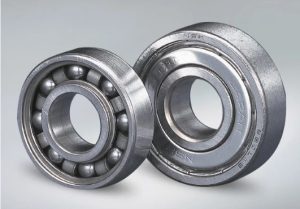
At its core, a bearing is a machine component designed to reduce friction between two moving parts — typically a stationary housing and a rotating shaft. Most automotive wheel bearings are rolling-element bearings, containing:
-
Inner and outer races
-
Rolling elements (balls or rollers)
-
Cage (separator)
-
Lubricant
-
Seals
Each element plays a role in managing forces and maintaining smooth rotation. When everything is in good condition, noise is minimal. But when something starts to go wrong, the physics of motion turns microscopic defects into audible warnings.
The Mechanics Behind Bearing Noise
Let’s break down why bearings produce different types of sounds when they fail:
1. Humming Noise
Typical Cause: Slight surface wear or early-stage damage
Physics Behind It:
A humming sound often originates from small, consistent irregularities on the bearing raceways or rolling elements. These irregularities create subtle variations in contact forces at specific frequencies related to rotation speed. Because the irregularity is small, the sound is uniform and continuous.
Common scenarios:
-
Slight pitting on the raceway
-
Minor deflection under load
-
Bearing preload misalignment
2. Growling or Rumbling
Typical Cause: Moderate wear or multiple irregularities
Physics Behind It:
Growling suggests a larger issue than humming. When many contact points are compromised—due to corrosion, extended wear, or insufficient lubrication—multiple irregular impulses combine to produce a lower-frequency rumbling or growling noise. The sound often changes with vehicle speed and load.
Common scenarios:
-
Corroded surfaces
-
Extended contamination
-
Multiple mini-pits forming
3. Whining or Squealing
Typical Cause: Lubrication failure or angular misalignment
Physics Behind It:
Whining sounds often occur when lubrication breaks down completely or when there is significant misalignment between bearing components. In this case, metal-to-metal contact generates higher-frequency vibrations that are transmitted through the structure and heard as a high-pitched whine.
Common scenarios:
-
Lost lubricant
-
Contaminated grease
-
Bearing preload issues
Physical Factors Influencing Bearing Noise
Several physical principles determine how and why these sounds develop:
Load and Stress
Bearings are designed to support specific load types:
-
Radial loads (perpendicular to shaft)
-
Axial loads (parallel to shaft)
-
Combined loads
Exceeding design loads increases contact stress, accelerating surface fatigue and noise.
Friction and Lubrication
Lubrication reduces friction and wear. When lubrication fails:
-
Friction increases
-
Surface roughness escalates
-
Heat builds up
-
Contact dynamics change
This shift generates noise and accelerates failure progression.
Surface Imperfections
Even microscopic surface defects (pits, cracks, micro-spalls) can:
-
Change local contact geometry
-
Create impact forces
-
Produce characteristic acoustic signatures
Rotor Dynamics and Frequency
The frequency of noise often corresponds to rotation speed. For example:
-
Bearing fault frequencies are linked to races or rolling element geometry
-
Speed changes can amplify certain frequencies
Table: Noise Type vs. Cause & Physics
| Noise Type | Primary Cause | Underlying Physics |
|---|---|---|
| Humming | Early wear | Small irregularities causing consistent force variation |
| Growling | Moderate wear | Multiple irregular impulses combining into low-frequency sounds |
| Whining | Lubrication failure / Misalignment | High friction and metal-on-metal vibration |
| Clicking | Debris or uneven load | Localized shock impacts |
Diagnosing Bearing Noise
Early detection of bearing issues improves safety and prevents secondary damage. Here’s a simple list for checking potential bearing noise sources:
Symptoms Checklist
-
Noise that increases with speed
-
Noise that changes with steering load
-
Vibration in the steering wheel or floorboard
-
Brake noise during turns
-
Uneven tire wear
Maintaining Bearings and Preventing Failure
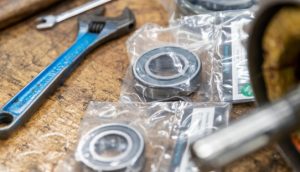
Proper maintenance extends bearing life:
-
Regular inspection — Catch wear before it becomes severe
-
Proper lubrication — Periodic relubrication if applicable
-
Correct installation — Avoid misalignment and improper preloads
-
Environmental protection — Seals must prevent dirt and water ingress
When replacement is necessary, choose quality parts designed for your vehicle and driving conditions. You can Buy Wheel Hub & Bearings online to ensure reliable and durable components.
Conclusion
The noises that bearings produce — whether humming, growling, or whining — are not random but rather the result of specific physical changes in load distribution, friction, and surface condition. By understanding the physics behind these sounds, technicians and drivers can diagnose issues more accurately, intervene earlier, and choose the right components to keep vehicles safe and performing well. Early recognition of bearing noise and prompt action help prevent costly damage and ensure smoother, quieter driving for years to come. When replacement becomes necessary, be sure to Buy Wheel Hub & Bearings online for parts that support durability, precision, and peace of mind.